
Probate Real Estate FAQ

Answers to Common Probate Real Estate Questions
We help Estates, including Executors, Administrators, and Attorneys, with their Probate real estate sales in Los Angeles County, handling everything from pre-listing preparation to closing escrow. As Certified Probate Real Estate Specialists, and as an Attorney, we know that selling Probate property in Los Angeles after the passing of a loved one can be an overwhelming task.
So, if you're looking for a Probate Real Estate Agent in Los Angeles to represent you in selling or buying Probate property, it’s important to work with a specialist who understands the legal, financial, and procedural issues involved. Otherwise, you may waste valuable time and money.
(Visit our Probate Real Estate page for an overview of this type of transaction and our Client Testimonials page to see how we’ve successfully guided others through the process).
What Is Probate Real Estate?
When someone passes away and owns property, the California Probate Code establishes certain rules and procedures for the disposition and distribution of Probate real estate. See also Petition for Probate.
In other words, “Probate” is a legal process where a deceased person's ("Decedent") assets, including real estate, are collected, valued and distributed in accordance with a Will, or state law if there is no will.
Think of Probate real estate as a “title clearing process” which ensures the property will be transferred to the rightful Beneficiaries. In addition, it provides for judicial supervision by the Probate Court (which also handles Trust, Guardianship, and Conservatorship proceedings) to make sure the Decedent’s property is properly accounted for and distributed as intended after all debts and expenses have been paid.
Generally, real estate held in Joint Tenancy, Community Property with Right of Survivorship, or a Living Trust, does not go through Probate.
What Is The Role Of A Personal Representative?
A Personal Representative, either an Executor (named in a Will) or an Administrator (when there is no Will), is appointed by the Probate Court and manages the Decedent's Estate. This may include selling Probate real estate.
Early in the proceedings, the Court generally issues a document called Letters Testamentary (appointing an Executor) or Letters of Administration (appointing an Administrator) which identifies and gives the Personal Representative the legal authority to act.
Personal Representative duties include working with an Estate Attorney and, when appropriate, a Probate property specialist to gather assets, pay debts, and distribute the remaining Estate to Heirs or Beneficiaries.
When Does The Independent Administration Of Estates Act (“IAEA”) Apply?
The IAEA allows a Personal Representative to administer much of an Estate, including Probate real estate listings, without full Court supervision. This authority may be granted by the Will or by Court Order.
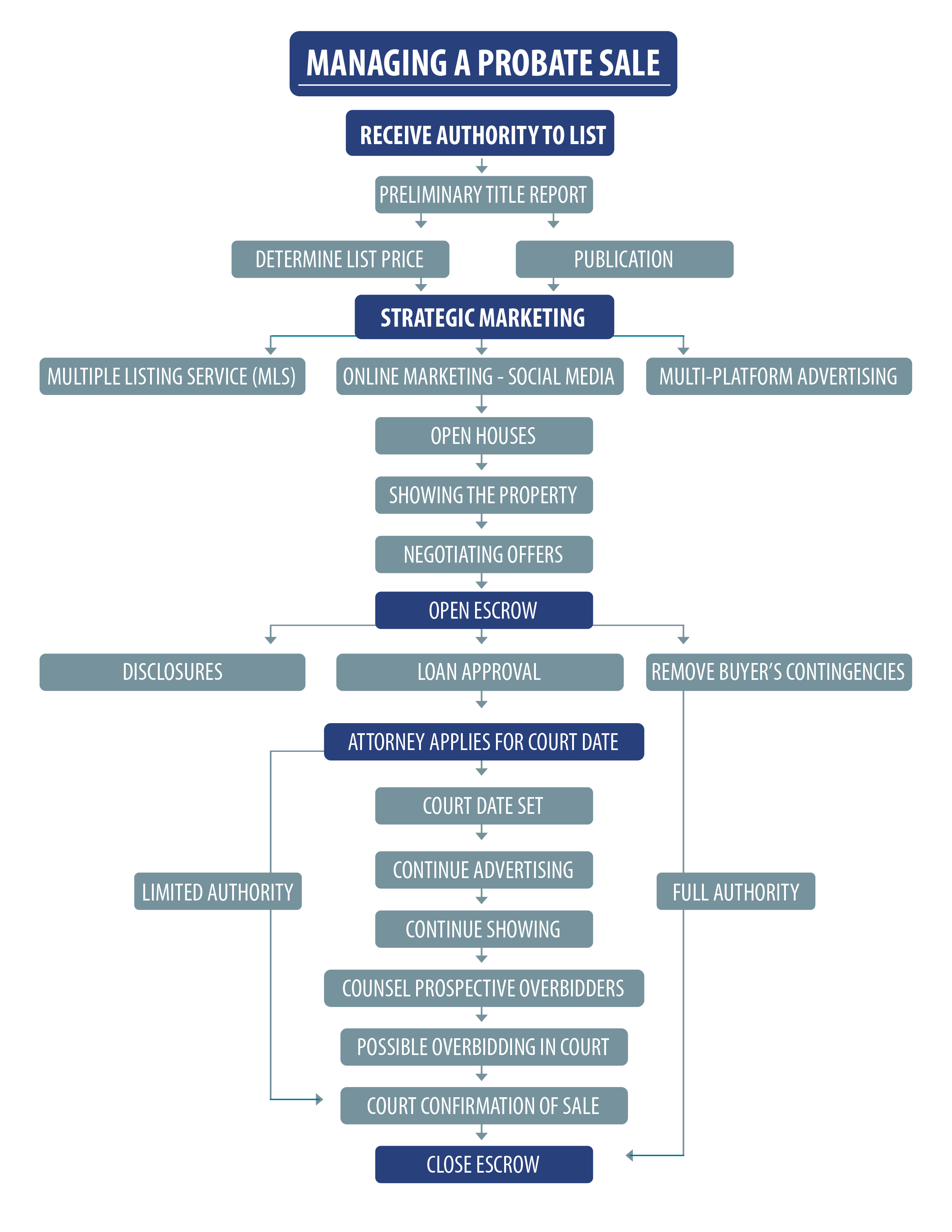
A Personal Representative can have either "Limited Authority" (requiring court oversight of real estate sales) or "Full Authority" (allowing them to sell Probate property without Court confirmation unless objections for good cause are raised).
What Is The Difference Between “Limited Authority” And “Full Authority”?
The general difference between Limited and Full Authority is:
- Limited Authority: Court approval is required to sell or encumber real property.
- Full Authority: The Personal Representative may sell, exchange, or encumber real property without Court approval, unless objections are raised.
How Does Probate Real Estate Work?
A Personal Representative may need to sell Probate property in Los Angeles, which may or may not require Court confirmation. For example, it could be necessary to sell Probate property to pay debts, distribute assets, or fulfill the Will.
With Full Authority, the Personal Representative can generally list the property with a Probate real estate Agent without Court confirmation. Once the Probate property has gone into escrow, the Estate’s Attorney will notify interested parties with a "Notice of Proposed Action." If no objections are filed within 15 days, the sale proceeds without a hearing.
How Long Does It Take To Sell Probate Property In California?
The timeline for selling Probate property depends on the circumstances of the Estate. Some Probate sales can close in a few months, while others may take longer if Court approval or confirmation is required. When a Personal Representative has Full Authority under the IAEA, the property can often be sold much more quickly than in Court-supervised sales.
Do Probate Homes Have To Be Sold "As-Is"?
Many Probate homes are sold “as-is,” meaning the Estate may not make repairs before the sale. However, this is not always the case. The Executor or Administrator may choose to make improvements, stage the property, or prepare it for the market in order to attract stronger offers and maximize value for the Beneficiaries.
What Is A Notice Of Proposed Action?
When selling Probate real estate without the need for Court supervision, the Personal Representative is generally required to give notice to interested parties such as Heirs, Beneficiaries, Creditors, and sometimes the Attorney General. This notice outlines the terms of the proposed Probate property sale and allows time for objections.
What Is A Notice Of Sale?
If required, a Notice of Sale must be published before the sale of Probate real estate in Los Angeles County. This public notice provides details about the property and sale terms and is typically handled by the Estate Attorney.
Are There Price Restrictions In A Probate Sale?
Court-confirmed sales must be at least 90% of the appraised value of the property set within one year prior to the sale. Also, terms, deposits, and contingencies are subject to Court approval.
Sales by a Personal Representative with Full Authority under the IAEA may follow standard real estate terms.
Are There Required Disclosures In A Probate Sale?
While Probate sales are exempt from some standard disclosures, Personal Representatives must still disclose known material facts and comply with agency disclosure requirements.
How Do You Submit An Offer In A Probate Sale?
Offers should be made in writing and state whether Court confirmation is required. Probate real estate offers in Los Angeles are typically “as-is,” though repairs may be negotiated depending on authority and circumstances.
Is Court Confirmation Always Required?
No. Sales by a Personal Representative with Full Authority under the IAEA generally do not require Court confirmation. Limited Authority sales and some other cases still require Court approval, which may include an "overbid process."
What Is The Overbid Process For Probate Real Estate?
If a confirmation hearing is required, another Buyer can submit a higher offer according to the statutory formula set forth in the Probate Code.
The overbid must exceed the original bid subject to the following formula: (a) the amount of the original bid, plus; (b) at least 10% of the first $10,000 of the original bid; plus (c) at least 5% of the amount of the original bid in excess of $10,000. So, if the original bid returned to the Court for confirmation is $500,000, then the initial minimum overbid must be for at least $525,500 (10% of the first $10,000 = $1,000; plus 5% of the remaining balance of that bid of $490,000 = $24,500; so, $500,000 + $1,000 + $24,500 = $525,500).
In addition, the “winning” overbid party must appear at the hearing with cash or a cashier’s check (no personal checks) in an amount totaling at least 10% of the minimum overbid price to successfully overbid. In the example stated above, that would be $52,550.
Bottom Line
Selling Probate property in Los Angeles can be complex. Whether you’re an Executor, Administrator, or Beneficiary, working with a Certified Probate Specialist in Los Angeles can make the process far easier and more successful.*
(For additional information concerning Probate, Trusts and Conservatorships, you can visit the following websites: California Courts Judicial Branch, Los Angeles Superior Court Probate, California Legislative Information (for the Probate Code) and our Trust and Probate Glossary. You can also review our blog posts, including "Selling Probate Real Estate in Los Angeles: What Families Need to Know.")
*Please note that the foregoing is for informational purposes only and does not constitute legal advice. For legal advice concerning all aspects of Probate, the IAEA, Trusts or Conservatorships, you should contact your Attorney.
